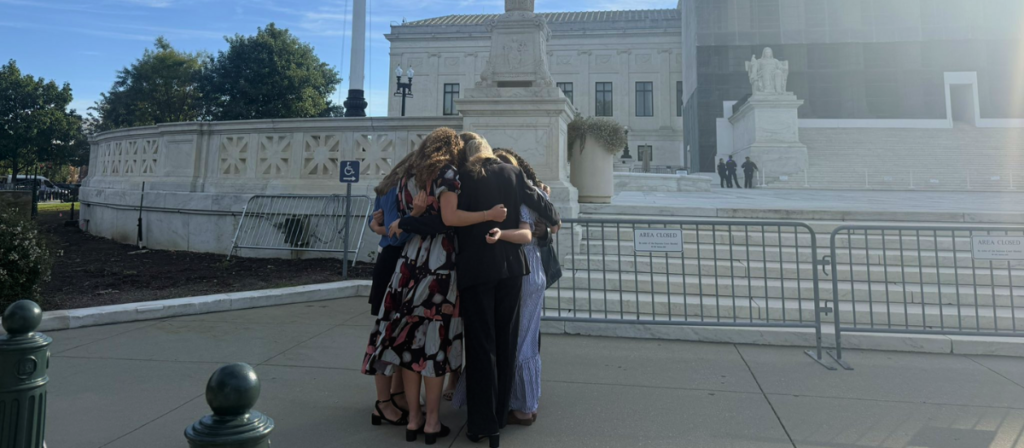

“The First Amendment stands as a bulwark against any effort to prescribe an orthodoxy of views,” wrote Justice Neil Gorsuch in an 8-1 resounding victory for our constitutional rights in Chiles v. Salazar. The Court wrote that the principle, “reflect[s] a belief that each American enjoys an inalienable right to speak his mind and a faith in the free marketplace of ideas as the best means for finding truth.”
Laws like Colorado’s ban on “conversion therapy”, at issue in this case, on the other hand, “suppress speech based on viewpoint,” and “represent an egregious assault on both commitments.”
The case involved Colorado’s 2019 Minor Conversion Therapy Law. The statute prohibited mental health professionals from engaging in any practice—talk therapy included—that sought to change a minor’s sexual orientation, gender identity, or related behaviors and attractions. Yet the law explicitly permitted—and even encouraged—the affirmative counseling that supported gender transition or LGBTQ+ identification that the government prefers. Kaley Chiles, a licensed professional counselor, always tried to help clients achieve their desired objectives, including helping them reject feelings that did not align with their gender, if they so desired. But Colorado wanted to force her to go against the client’s desire and only affirm the feelings by force of law.
Justice Gorsuch wrote for the majority of the Court, with only radically liberal Justice Ketanji Brown Jackson dissenting. Justice Elena Kagan filed a concurring opinion along with Justice Sonia Sotomayor.
The ruling represents a forceful rebuke of state efforts to impose an ideological orthodoxy that seeks to silence dissenting views, often infringing not only on free speech rights but also on the free exercise of religion. This is a win for all Americans.
The Colorado law was found unconstitutional as applied to counselors who use talk therapy only, as it violates the First Amendment. Radicals in Colorado, as in other states, sought to hide behind some questionable practices of shock therapy and other discredited practices to then justify violating fundamental rights to freedom of speech by seeking to censor opposing viewpoints. Thankfully, the Court saw right through it.
The lower courts did not; they had sided with the state, buying the argument that they were merely regulating professional conduct. Today, the Supreme Court reversed saying, “the courts below failed to apply sufficiently rigorous First Amendment scrutiny.” The Court noted that the law sought to regulate the content of the doctor’s speech.
Her speech does not become conduct just because the State may call it that. Nor does her speech become conduct just because it can also be described as a “treatment,” a “therapeutic modality,” or anything else. The First Amendment is no word game. And the rights it protects cannot be renamed away or their protections nullified by “mere labels.”
The Court concluded, “Under the First Amendment, what matters is not how a government describes its law or whether the law may regulate conduct in other circumstances. What matters is whether, in fact, the law regulates speech in the case at hand.”
The Court also makes clear that, “The fact that the State’s viewpoint regulation targets only licensed healthcare professionals… changes nothing.” The fact is that Colorado and Justice Jackson have a policy preference they would like to impose on the text of the First Amendment. But the Court is not having it.
Colorado and the dissent may believe that the First Amendment should carry “far less salience” for the Nation’s millions of “medical professionals” than for everyone else. …. They may believe that state-imposed orthodoxies in speech pose few dangers and many benefits in this field (and who knows what others). But their policy is not the First Amendment’s. The Constitution does not protect the right of some to speak freely; it protects the right of all. It safeguards not only popular ideas; it secures, even and especially, the right to voice dissenting views.
Applied to the medical field and given the painful COVID period that exposed so many abuses, it is hard not to see how the Court’s logic protects our rights.
A prevailing standard of care may reflect what most practitioners believe today, but it cannot mark the outer boundary of what they may say tomorrow. Far from a test of professional consensus, the First Amendment rests instead on a simple truth: “[T]he people lose” whenever the government transforms prevailing opinion into enforced conformity.
This is certainly a landmark decision for liberty that we should celebrate. But do not be deceived. Radical liberal states like Colorado will continue their assault on our Constitutional Rights in the name of their preferred progressive ideology. We must remain prayerfully vigilant.