
Last month, two Ole Miss students were tragically found dead on campus. Near their bodies were found open packages of kratom, a supplement based on a plant from Southeast Asia that has become very popular in the United States. Though the toxicology reports are still pending, this case has raised the question about why, in the face of growing evidence that Kratom is dangerous, it is still completely unregulated at the federal level?
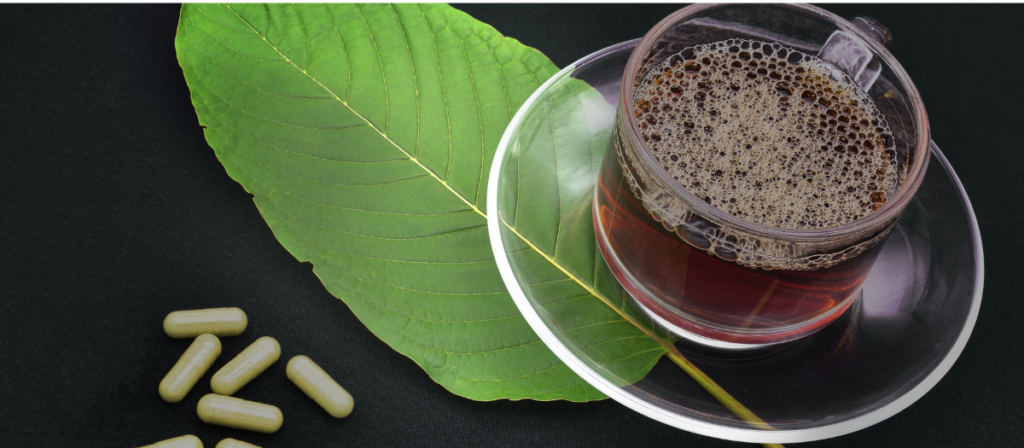
Kratom can be purchased in the U.S. at gas stations, smoke shops, websites, and convenience stores. It comes in powders, capsules, fun colored chewables, and extracts, though its most common form is as a drink, usually in a shot or small volume size. Popular brand names include Fruity Perks, Happie Tabs, and Kama. Much like other wellness boosters that can be found in a grocery store juice aisle, kratom is marketed as an alternative to anxiety meds and as a plant-based supplement for energy.
But what many do not know is that kratom is a highly addictive opioid.
Kratom comes from dried leaves of a tree found in southeast Asia. Far more than just a plant, however, a structural analysis done by the Food and Drug Administration (FDA) in 2018 found that kratom has compounds that act like an opioid. Like oxycodone, morphine, or heroin, kratom users can develop a tolerance to the chemicals, resulting in ever-increasing dose escalation, dependence on the drug, and severe withdrawal syndrome. The agency warns that it should not be used for any reason because of the high risk of adverse health events, including liver toxicity, seizures, substance-use disorder, neonatal abstinence syndrome, and in some cases, death.
Despite this, Kratom is currently completely unregulated at the federal level. That means there is no standardized dosing, no required warning labels, no guarantee of purity. There’s no prescription required; it can be purchased without an ID check in many places, and it is taken without medical supervision. This all leads many consumers to assume that Kratom is safe. Opioids are not typically sold on gas station shelves, after all. But this could not be further from the truth.
Because of the way that kratom is advertised, its victims are not always the typical demographic susceptible to drug abuse. Many, like Cameron Francis, are high-achieving college students and young adults looking for a natural supplement to boost their mood. Before long, and completely by accident, they become hooked on a substance that they had no idea had the potential for addiction.
At the Coleman Institute in Richmond, Virginia, a leading outpatient drug and alcohol detox program, nearly 75% of the incoming calls they receive for treatment are now related to kratom. According to Coleman, detox from kratom takes at least five days, which is similar to fentanyl and longer than that of most prescription opioids and, in severe cases, can come with all of the agonizing symptoms of any other drug withdrawal. Cameron ended up at Coleman after several different treatments failed to free him from his kratom addiction. He and his parents have now joined a growing segment of American families warning about kratom.
Although it’s only been in the American market since 2004, Kratom’s trail of destruction is already long. From 2020-2024, the CDC reported 5,208 kratom-linked overdose deaths. The data did not include California, Florida, or Texas, states that do not test for Kratom in overdose investigations, so the actual amount of kratom-linked fatalities during that time frame was likely much higher. And the problem is growing. Kratom-related poisonings have risen nearly 1200% in the past decade.
In 2025, products containing large amounts of the kratom alkaloid, 7-hydroxymitragynine (7-OH), entered the marketplace, complicating the conversation. This 7-OH is one of the alkaloids naturally occurring in Kratom, but it can be extracted and synthetically concentrated into a product much stronger than natural Kratom. According to the FDA, 7-OH “demonstrates substantially greater mu-opioid receptor potency… than classical opioids such as morphine.”
Earlier this year, the Drug Enforcement Agency (DEA) announced plans to ban 7-OH, which is a critical first step towards regulating kratom and an action the agency should be applauded for taking. However, the concern is that the action does not go far enough. Instead, it reinforces the perception that 7-OH products are dangerous, but pure kratom is not.
Although 7-OH is one derivative of kratom, other alkaloids and kratom-derived concentrates such as mitragynine pseudoindoxyl, MGM-15, and MGM-16, are being included in products labeled as kratom and increasing their abuse liability. The DEA recently temporarily made these Schedule I substances because they are more potent than morphine, which is a Schedule II drug. But to fully protect consumers, all of these kratom-derived compounds should be permanently placed as Schedule I.
In Indonesia, where 95% of the kratom that is imported to the U.S. is grown, kratom is banned for use as a supplement. And in this country, nine states fully ban kratom leaf. But the federal government is still working to catch up.
In both 2016 and 2018, under commissioners for the Obama and Trump Administrations, the FDA formally recommended that kratom be a Schedule I controlled substance, due to its potential for abuse and lack of any approved medical uses. However, the industry’s primary lobbying arm, the American Kratom Association, was able to block that recommendation from being implemented.
The industry argues that kratom is a lower-risk alternative to treating chronic pain than prescription opioids. And that the testimonies of those for whom kratom has helped should not be disregarded. However, this is eerily similar to how OxyContin was originally marketed. It too was touted as a safer alternative to the main drug for managing pain at the time, morphine. In reality, the active drug in OxyContin, oxycodone, is far stronger and more addictive than morphine (like many kratom-derived concentrates). The opioid crisis sparked by Oxycontin should be a cautionary tale for how we approach Kratom. Americans should be free to pursue novel treatments. But kratom is clearly a substance that should not be available to purchase without guardrails.
Of course, the industry has another reason for not wanting to regulate kratom. The current market size for kratom is $4.42 billion, but it is projected to grow to over $14 billion in less than 10 years.
Americans have a reasonable expectation that the energy shot they pick up on a whim at the gas station counter is not going to become an unwanted, crippling addiction. Or, in the case of the Mississippi students, a potentially fatal drug overdose. When it comes to keeping dangerous substances off the market, the federal government can and should use its power for good.