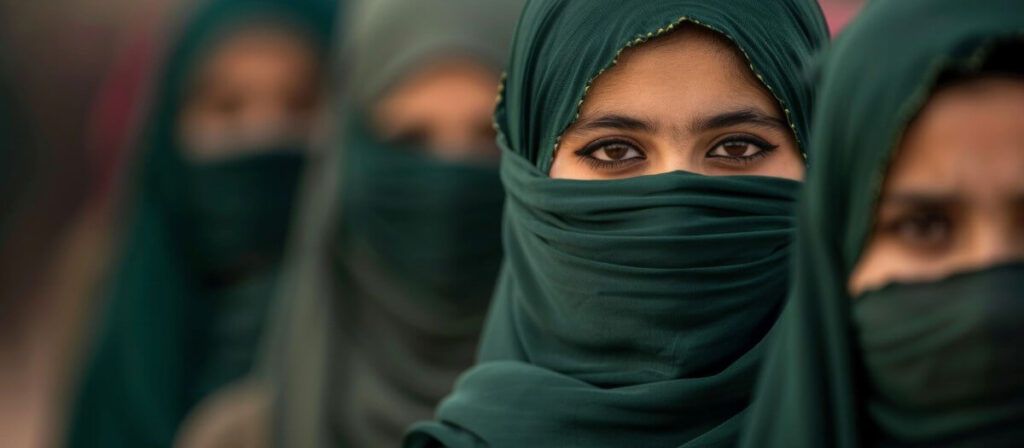

Two weeks before The United States launched Operation Epic Fury on Iran, I sat down with my dear friend Mona Moazzazz, a former colleague, at our usual Phõ spot. Mona and her family, being of the Baháʼí faith, (centering around the oneness of humanity and importance of all religions) were persecuted and forced to flee Iran when the Islamic Regime took over the country. During the last two years of my friendship with Mona, I’ve had the opportunity to gain profound insight as she’s shared with me about her faith, her family in Iran, and her fierce advocacy for her people. Every word she speaks carries passion and hope for Iran’s return to its former glory. At our most recent dinner I began to ask her about the continuing protests, Iran before the Islamic regime, Sharia Law, and what she hoped was to come. She took a breath and looked at my red nail polish and said “Mycah, the girls in Iran used to be able to paint their nails red like you. They aren’t allowed to do that anymore.”
Mona’s words in an excerpt from her law review beautifully encapsulated women’s lives before the Islamic Republic.
“In Iran, beautiful women with long brown hair adorning their shoulders dance in mini-skirts paired with fashion-forward, knee high boots. In the evenings, they sing along to the tunes of Elvis Presley and Tom Jones. The women ride their bikes through the park, their ponytails blowing in the wind.”1
There could not be a more beautiful yet harrowing display of the lives of Iranian women pre-1979. To Americans, this sounds like the life of young women here–free and full of ambition. However, this freedom and prosperity quickly came to a halt in Iran when the Islamic Republic came to power in 1979, and Islam became the religion of the state. Mona explains the legal transition for women as such,
“The laws came backed by a powerful, so-called ‘morality police,’ which would do everything possible to make invisible the 40 million girls and women of Iran. Gone were the days a woman could feel the wind in her hair. As the compulsory veil covered her head, her neck, and her arms, gone were the days a woman flew at the same heights as a man.”2
Women in Iran are now under Islamic “moral” code; they are required to wear a hijab; they cannot travel without their husbands, dance publicly, ride bikes, nor play sports. The morality police have terrorized Iranian women for 47 years and swiftly punished them for ever so slightly breaking Sharia law.
Most women cannot fathom a life as such. The @Feminist Instagram account certainly is unable. February 28, the day Operation Epic Fury began, they posted this: “No war with Iran, No to the Islamic Republic, No to imperial invasion, Let Iranians in Iran choose.” After weeks of Iranian women burning images of their Supreme Leader with cigarettes, lighting heaps of hijabs on fire, and dancing in the streets demanding freedom, this is what so-called “champions” of women’s rights post? The reality is Iranians don’t have the freedom to overthrow their government by themselves; this is why they made their cry for help heard around the world. All they have is their voice. What kind of “feminist” ignores the cries of our sisters in Iran for freedom?
So, if our feminist movement is not going to stand for these women, how can we? Through our active faith in Jesus Christ and embracing the commands of His holy Word. One beautiful thing revealed in faith is that the Lord is the author of dignity. Jesus’ life so evidently displayed this in how He saw value in women in a cultural time when many did not. He ascribed dignity and beauty to them, acknowledging the truth that each person, male or female, is created in the image of God. Genesis 1:27 points us directly to such, “In the image of God he created him, male and female he created them.” Our faith centers on the Imago Dei. The Lord ascribes beauty to His creation with mankind as the crown jewel. Our Christian faith is rooted in a reality of equality the feminist movement could only dream of creating. Apart from Christ and a true view of human value, equality as feminists cry for will never be achieved. As Galatians 3:29 says; “There is neither Jew nor Greek, there is neither slave nor free, there is no male and female, for you are all one in Christ Jesus.”
Equality is a profoundly Biblical principle and points us to value all men and women regardless of worldly measures. This should spur us as Christians to uplift the voices of Iranian women and pray fervently for the transformations of the hearts who view them as less than. It should also lead us to be active in building relationships with those who may be different from us in background or story, amplifying their voices in our spheres of influence. This is true female empowerment and transcends any aim of the modern feminist movement as we know it today.
*Mycah Heise is a Young Women for America Ambassador in California.
References:
1Moazzazz, Mona. Review of The Butterfly Effect: The Women of Iran As Inspiration for a New Legal Duty to Humanity in the American Legal System, 2024.
2Ibid.