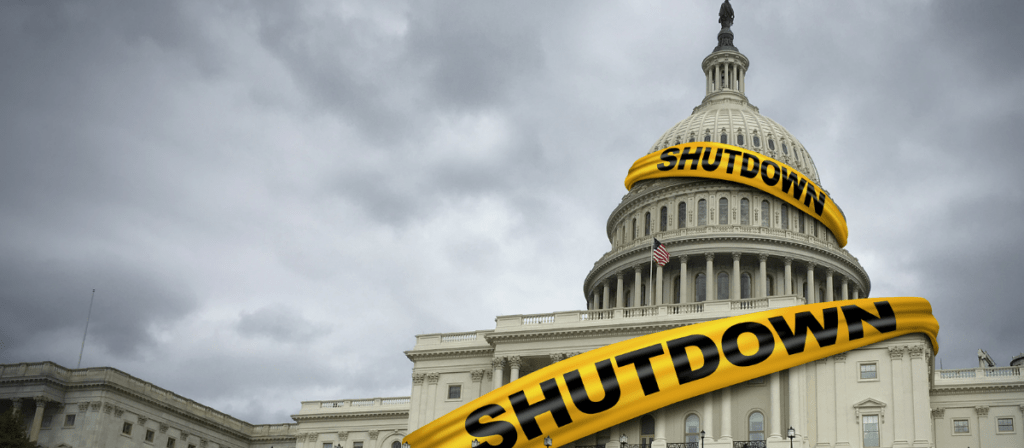

After over 43 days and 15 votes on the House-passed funding bill, the longest government shutdown in American history is finally over. Despite its record-breaking length, despite forcing thousands of federal workers to miss multiple paychecks, despite low-income families losing their SNAP benefits, despite thousands of flight cancellations and hours long TSA lines, the finale to the Schumer shutdown came without a single significant policy change.
For weeks, Republicans asked to maintain federal funding levels as they currently are while legislators debated certain desired policy changes. But because the Senate requires 60 votes to pass legislation, and Republicans only hold 53 seats, Democrats decided to use this opportunity to attempt to force Republicans to adopt partisan demands. Chief among them was the demand to increase funding by $1.5 trillion in order to extend Obamacare healthcare credits, many of which provide insurance for illegal immigrants and subsidize gender mutilation procedures and abortion services. They thought that as the shutdown inflicted more pain on the American people, the Republicans would be more likely to cave to their demands. But holding the nation hostage over such unpopular asks turned out to be a poor negotiating strategy.
Senators John Fetterman (D-Pennsylvania), Catherine Cortez-Masto (D-Nevada), and Angus King (I-Maine) voted with the Republicans to reopen the government every time the bill was brought to the floor. On the 15th time, they were joined by five other Democrats to break the required 60 vote threshold. Sen. Dick Durbin (D-Illinois) is the second ranking Democrat in the Senate and is notably retiring next year. Sen. Jeanne Shaheen (D-New Hampshire) was involved in the negotiations throughout the shutdown and also joined in on the final vote; like Durbin, she is retiring. Sen. Tim Kaine (D-Virginia) represents nearly 150,000 federal workers; most Washington insiders believed that either he and his fellow Virginia Senator Mark Warner would be instrumental in ending the shutdown for that reason. In the end, however, only Kaine, who is not up for reelection until 2030, and not Warner, who is in cycle next year, voted in favor of the deal. Both Sens. Maggie Hassan (D-New Hampshire) and Jacky Rosen (D-Nevada) joined their colleagues; like Kaine, they are not up again for several years.
It is notable that not a single one of those five Democrats will have to face the voters any time soon. Because in the end, the Democrats did not get much of anything out of this weeks-long national ordeal. Instead of a permanent extension of healthcare subsidies, Democrats got a promise from Senate majority leadership that there would be a vote in December on a bill related to those subsidies with no guarantee that it would pass. However, there is no similar promise that the House would bring up such a bill.
Other important aspects of the deal included an extension of current funding levels until January 30, rather than the prior November deadline. It also restored any federal employee who received a reduction-in-force notice in early October to their job, along with backpay. While the original CR was just an extension of current funding levels, the Senate added on three of the twelve appropriations bills that their requisite committees have already passed on a bipartisan basis. One of those bills, the agriculture appropriations, included funding for the SNAP program through FY26, so that will not be a leverage point in the next round of funding negotiations in January.
As of today, November 17, the government is fully reopened, with air traffic back to normal, Smithsonian museums and national parks reopened, and all furloughed government workers back on the job. But with the 2026 midterms just around the corner, the full scope of political ramifications is yet to be seen.