
Google is having a bad week.
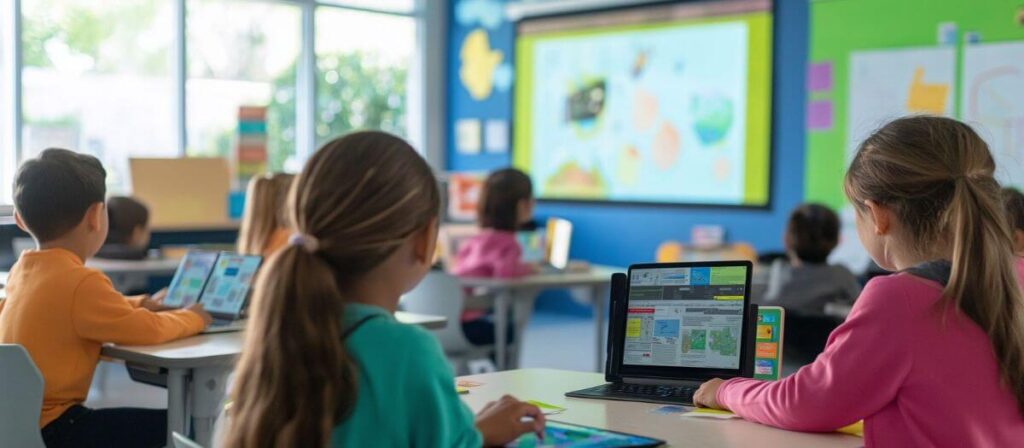
On Tuesday, NBC News issued a scathing report exposing YouTube’s takeover of America’s classrooms, facilitated largely through school-issued Chromebooks and iPads: One seventh-grader viewed 4,700 YouTube (owned by Alphabet, the parent company of Google) videos during class. An eighth-grader viewed 5,700 in class. A second-grader viewed close to 500 in just two months. Less than 5% were educational.
According to the report’s author, “Some of the students know they watch too much YouTube — but they also say it’s not their choice to be on a computer in school. The schools gave them a device and instructed them to use it for classwork. They also feel like the features on YouTube keep them watching,” and “Google says they give schools a lot of ways to control YouTube in the classroom, particularly if they use Google’s education software suite. But Google doesn’t let schools permanently turn off autoplay or YouTube Shorts if they allow students to browse YouTube.”
Teachers who have been unable to prevent extracurricular YouTube usage during school hours are now facing a new challenge from Google: AI.
On Wednesday, Senators Richard Blumenthal (D-Connecticut) and Josh Hawley (R-Missouri) launched an inquiry into Google’s aggressive push to integrate artificial intelligence into American classrooms. Their letter to Google CEO Sundar Pichai follows a Wall Street Journal investigation raising troubling questions about the impact of AI on students’ academic performance, emotional well-being, and ability to think independently.
Among the examples cited by the senators was an eighth-grade student who relied on Google’s Gemini AI to complete his algebra homework, only to fail his final exam. The technology helped him produce the right answers; it did not help him understand the math.
Computers in the classroom have become a runaway train. Teachers and administrators are struggling to regain control, tech companies keep stoking the engine, and all the while, students are being carried further and further away from the educational goals these technologies were supposed to help them reach.
For years, we’ve been told that putting more technology into classrooms would revolutionize education. Digital devices would personalize instruction, improve student achievement, close learning gaps, and prepare children for the jobs of tomorrow. Schools spent billions of dollars on laptops, tablets, software, and digital curricula.
But after years of investment, it is becoming increasingly apparent that we were sold a false bill of goods.
Mounting evidence calls into question whether these devices have delivered the educational benefits we were promised. Yet the push to put a computer in every child’s hands continues apace, now with the added challenge of artificial intelligence embedded in the devices and platforms students are required to use. And who is responsible for ensuring that the technologies we put in children’s hands are actually helping them learn?
That’s a question Concerned Women for America (CWA) recently raised in public comments filed with the Federal Communications Commission (FCC) as part of its review of the E-Rate program, which subsidizes internet connectivity for schools and libraries.
CWA is urging the FCC to reconsider the assumptions underlying federal support for classroom connectivity and to distinguish between providing schools with useful technological resources and making screens the default means of educating children.
The revelations about YouTube and Google’s AI ambitions ought to serve as a warning. We’ve already allowed one generation of technology to become deeply embedded in our schools without adequately reckoning with its consequences. Now we’re preparing to introduce another potentially more disruptive generation of tools before we’ve answered some of the most basic questions about the first.
Our children are not a captive market for technology companies, nor should they be unwitting participants in an endless experiment in educational innovation.
They deserve an education that puts their learning and development first. It’s time our policies did the same.