
Netflix has done much in recent years to alienate Christian and conservative audiences. Many conservative subscribers questioned the appointment of former Senior Obama and Biden administration official Susan Rice to the Netflix Board of Directors and the $50 million, multi-year development deal the company signed with Barack and Michelle Obama around the same time. It certainly gave every appearance of an “I’ll scratch your back, you scratch mine” arrangement in view of reports that Netflix CEO Ted Sarandos raised over $600 million for Obama’s Presidential campaigns, and Sarandos’ wife was rewarded with an ambassadorship to the Bahamas.
Likewise, Christian audiences were horrified by Netflix’s decision to air the blasphemous film, “The First Temptation of Christ,” and the recent controversy over LGBTQ content creeping into Netflix children’s programming.
So, viewers can be excused for their skepticism around Netflix’s new adaptation of the beloved children’s book series, Little House on the Prairie, especially given Netflix’s “Breaking-Bad” makeover of another beloved children’s classic, Anne of Green Gables.
Fool me once, shame on you. Fool me twice, shame on me.
But while there is plenty of room for criticism in Netflix’s Prairie, there is also much to like.
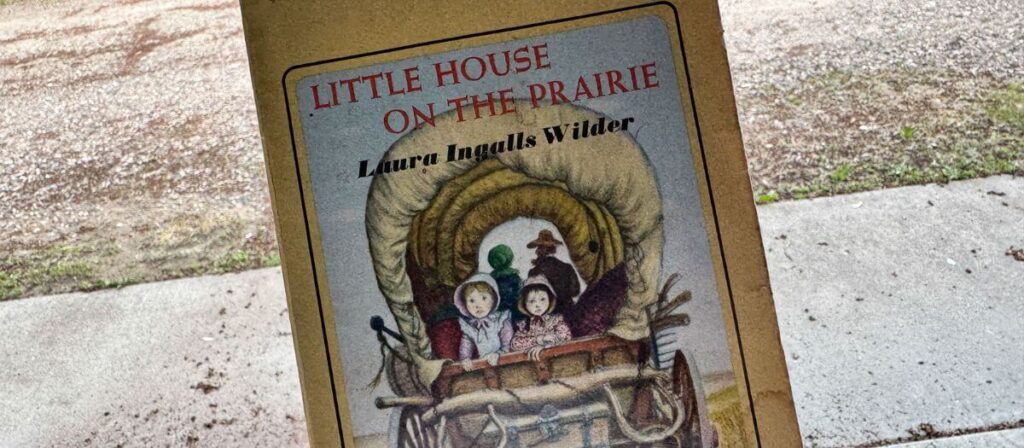
Little House on the Prairie offers a glimpse into pioneer life through the eyes of young Laura Ingalls. The original books on which the series is based were written by Laura Ingalls Wilder, almost certainly with significant editing and involvement from her journalist daughter, Rose Wilder Lane, who has been called one of the “true mothers of American libertarianism.”
Rose Wilder Lane’s worldview unquestionably trended toward rugged individualism: man against the world. In a journal entry dated April 15, 1937, Lane wrote, “One thing I hate about the New Deal is that it is killing what, to me, is the American pioneering spirit. I simply do not know what to tell my own boys, leaving school and confronting this new world whose ideal is Security and whose practice is dependence upon government instead of upon one’s self. … All the old character-values seem simply insane from a practical point of view; the self-reliant, the independent, the courageous man is penalized from every direction”
The Little House books are deeply infused with this “pioneering spirit,” but modern scholars question how much of this was a hagiographic glossing over of inconvenient biographical details. The real Pa Ingalls, for example, reportedly skipped out on debts, compounding the family’s significant financial problems by forcing them to move frequently (from Wisconsin to Kansas to Minnesota to Iowa and finally settling in the Dakota territory); they also received financial assistance from the Minnesota state government during the grasshopper plague emergency (between 1874 and 1877) and from the Dakota territorial government for Mary’s tuition to the College for the Blind.
The Netflix adaptation openly questions the “man alone on the frontier” premise, adopting a more communitarian perspective. It places the Ingalls family closer to town and shows them more reliant on their community than the books would suggest. The Ingalls family encounters Dr. Tann shortly after making a difficult river crossing in which most of their provisions are spoiled, the family dog is lost, the entire wagon nearly capsizes into the rushing waters, and Ma’s hands are bloodied from trying to hold on to the reins. After bandaging Ma’s hands, Dr. Tann speaks privately to Charles and tells him, “Most people come out west with more hands. Friends. Family. Not all alone.”
And, as you would expect, the Netflix series makes many concessions to 21st Century political sensitivities. But then again, this is a production from Netflix, not Angel Studios, or even Taylor Sheridan.
Now for the positives.
A PG rating on a Netflix series should generally be approached with caution, but in the case of Little House, the rating actually fits. There are no surprise “f-bombs” or innuendoes worked into the script; characters dress modestly and appropriately for the time and place in which the series is set. They are pioneers living in a rough, unsettled land; there are real dangers, as one might expect: hardship, peril, illness, wildfire. There are references to divorce, Mr. Edward’s alcoholism, and Charles’ brother’s (what we would now recognize as) PTSD from the Civil War. But all of these issues are handled with sensitivity and awareness that there are likely to be young viewers in the audience.
It also depicts a marriage tested by hardship, but one that comes out stronger through those trials, and a flawed (as we all are) but functional, loving family.
In a time when so many television series either downplay the importance of the husband and father or else the male characters are completely emasculated, Netflix’s Little House does neither. Charles Ingalls is not the saintly figure of Laura’s memory, but neither is he an afterthought or a hindrance to his smarter, more capable wife – which is what you might expect from a Netflix series. He admits his faults and acknowledges the choices he made that led to their present circumstances, but he also strives to do better, to improve their circumstances, and to provide for his family. He exhibits the qualities of Biblical manhood, like courage, wisdom, integrity, responsibility, leadership, humility, compassion, diligence, faithfulness, love, and endurance.
The depiction of Charles Ingalls in Little House on the Prairie offers a rare, positive model of male leadership. That type of leadership is rooted in moral strength and sacrificial care for family and community, which is exceedingly rare in today’s media marketplace. That alone deserves to be commended, even if it is not everything one could hope for in a TV adaptation of this timeless children’s classic.